Seattle Gay News
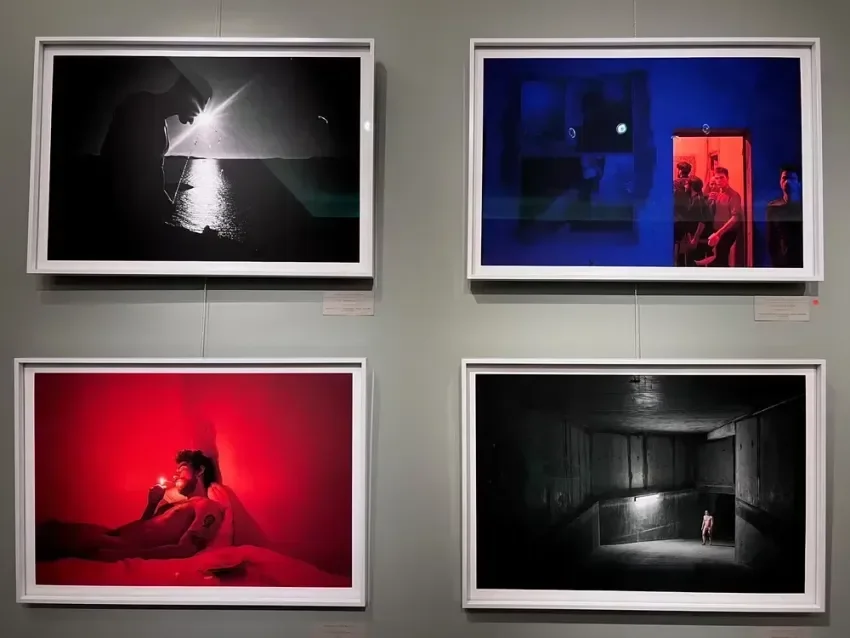
French photographer Hervé Lassïnce is a visual artist who creates striking photos of everyday, intimate scenes involving a diverse range of people, notably capturing intimacy between Queer men. His work blends classical references with contemporary photography to create modern art.
He began taking photos professionally in 2011, when casual shots of his friends turned into showcasing them in exhibits all over France and Europe. Now Seattle is home to Lassince’s first exhibition in the United States.
Nestled in the heart of Capitol Hill, Galerie Orsay Paris-Seattle (713 Broadway E., Seattle) is showcasing a select range of his work from Nov. 6 to Dec. 20.
Lassïnce’s photography is inspired by that of Nan Goldin from the ‘80s and ‘90s, who was known for taking pictures of people in intimate relationships and Queer subcultures.
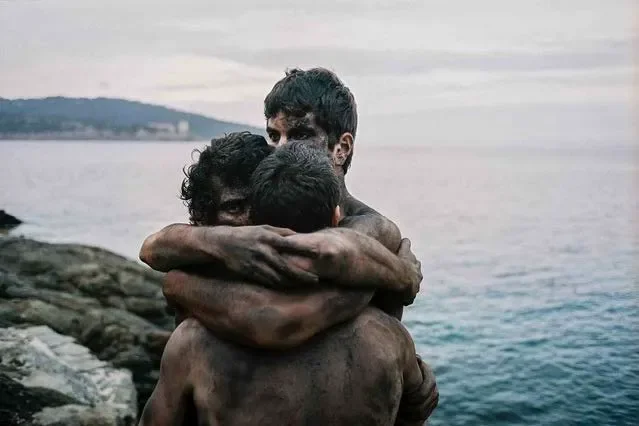
“As a Gay male [growing up], I was not surrounded with Queer images of Gay men in movies or TV shows,” Lassïnce told the SGN. “And when they had such characters in fiction, most of the time they were ridiculous [stereotypes] or very tragic. In my twenties and thirties, I was very skeptical about that and couldn’t recognize my friends.”
Lassïnce began to take photos of his friends as their raw, authentic selves, with their queerness being a natural element. Over the years, Lassïnce has gotten messages on social media from other LGBTQIA+ people about the positive impact his images have had on them.
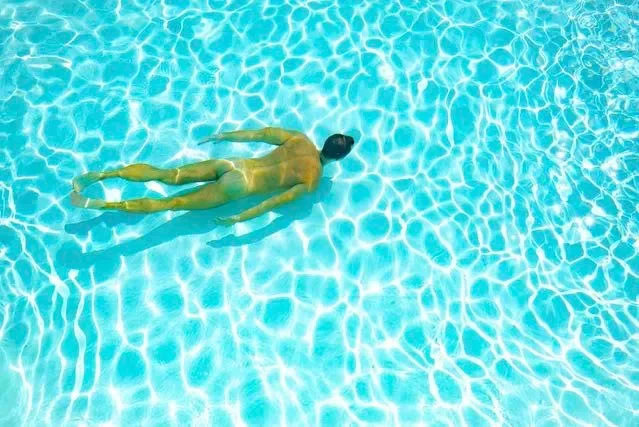
“In this specific exhibition, there are a lot of men, a lot of Gay white men,” Lassïnce said. “But in my book, Nous, there are a lot of different people. There are old and young people, children, people I met in India or in Russia, for instance.”
When asked which of the images displayed in the gallery is his favorite, he described a photo titled “Khniss, Tunisia,” depicting a young man playing with a ball as his friend’s arm enters the frame. He said it was the perfect shot.
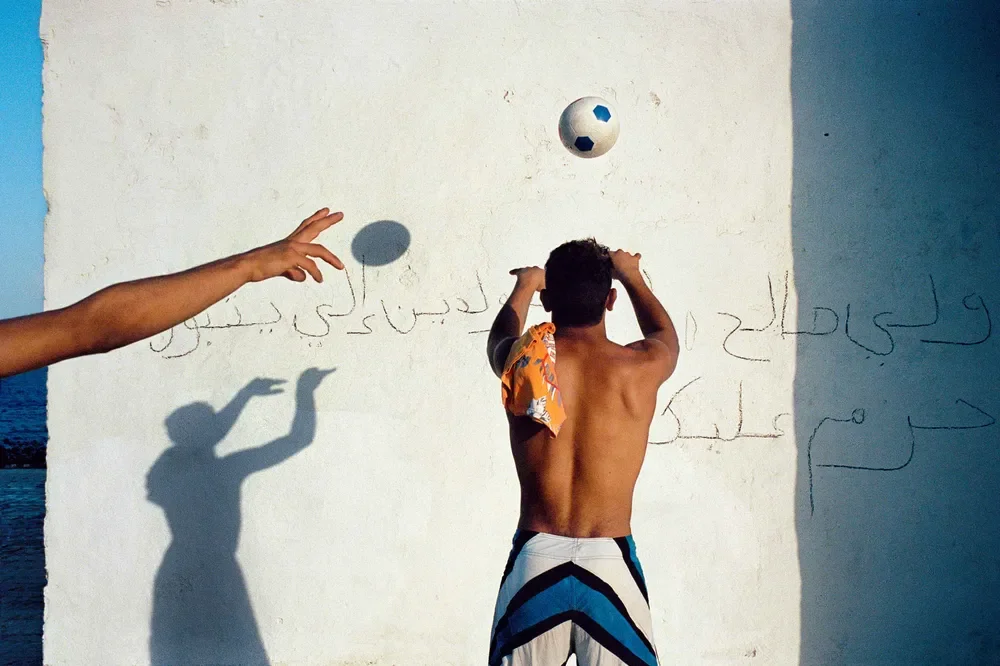
“Sometimes a street photographer gets this kind of luck, where everything sets in the right place at the right moment,” he said.
Simon Lhopiteau, the gallerist at Galerie Orsay Paris-Seattle, has been a good friend of Lassïnce’s for almost 15 years. He chose 16 images for the gallery to showcase, from among hundreds in Lassïnce’s portfolio.
You see a photograph, and suddenly you feel something special; you feel connected with the picture,” Lhopiteau told the SGN. “I had Hervé tell me the [stories] behind all the pictures, and he told me when he took them and circumstances surrounding them.”
Lhopiteau said he wanted people entering the gallery to have the same emotions as he did when he first laid his eyes on the photos.
With his photography, Lassïnce hopes to communicate to people all around the world in a universal language.
“That’s why a lot of people in my pictures are naked, because when you’re naked, you can’t really see where the person is from or their social origin,” he said.
More information about the exhibit can be found at https://galerieorsay.com .
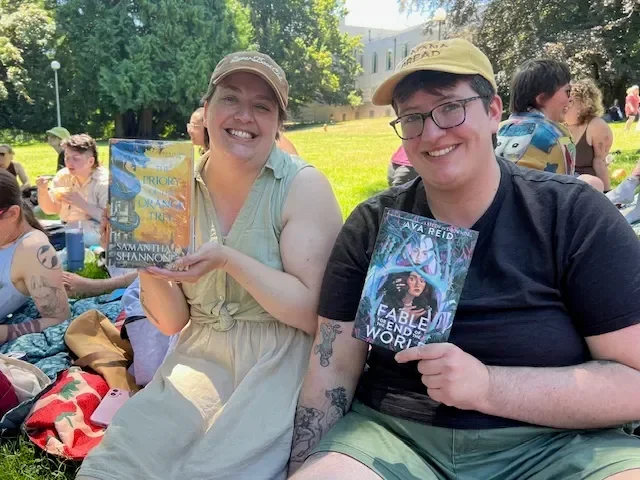
In the cool shade of trees on a hot Seattle summer day, strangers came together to share their love of reading in a safe space.
On July 12, in Volunteer Park, the Queer Silent Book Club hosted “Gays Reading in the Park.” While not very silent, strangers became friends as they chatted about their favorite books and what connected them.
The book club, founded in February by Ronan Leshley and Dani Shull, was established following Donald Trump’s reelection. Shull explained the reason behind it.
“How can we create an environment where happiness and enjoying books [can be fostered] and also be angry and scared?... So many things are under threat right now. Bills are being passed that are threatening so many aspects of life.”
The event, Leshley explained, is intended to serve as a safe space where people can reset and regain some energy for the coming week. While it’s a Queer book club, no identities will be checked, so anyone is welcome to join.
Everyone brought the books they are currently reading. Shull is listening to the audiobook Necrobane, the second in the Sapphic Warden series by Daniel M. Ford, which follows a female necromancer in a small village that seemingly holds powerful secrets; she must use her magic to save the world from evil.
Leshley is reading Fable for the End of the World by Ava Reid, a Sapphic Hunger Games-esque book about a twisted game in which the indebted are hunted to death. Two fates of two girls, one hunter and one hunted, become intertwined as they slowly fall in love against all odds.
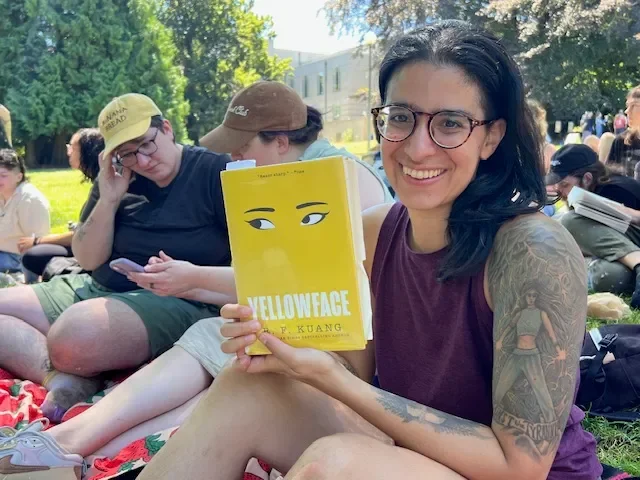
For Tara Rayres, a freelance book editor, it was their first time attending a Queer Silent Book Club event, having heard about it through a friend.
“I think the Queer-specific part of it was like a big thing for me,” Rayres said. “I feel safer and more at home. People are not going to inaccurately perceive me or have frustrating situations [occur].”
Rayres brought along the book they are currently reading, Yellowface by R.F. Kuang, which follows a white woman who steals the work of her dead rival, a Chinese woman who dies in her prime. She rebrands herself with an ethnically ambiguous name and author photo and becomes a rising success.
Rayres found this book appealing, because, working in the publishing world, they are interested in the way people of color have been or haven’t been allowed in editing spaces.
“I love connecting through books and literature in Queer spaces,” Rayres said. “I’m from Louisiana, and it has its strengths and flaws, but people talk and engage more with each other [there]. It’s kind of been a journey finding community in [Seattle], and I feel this space is super welcoming.”
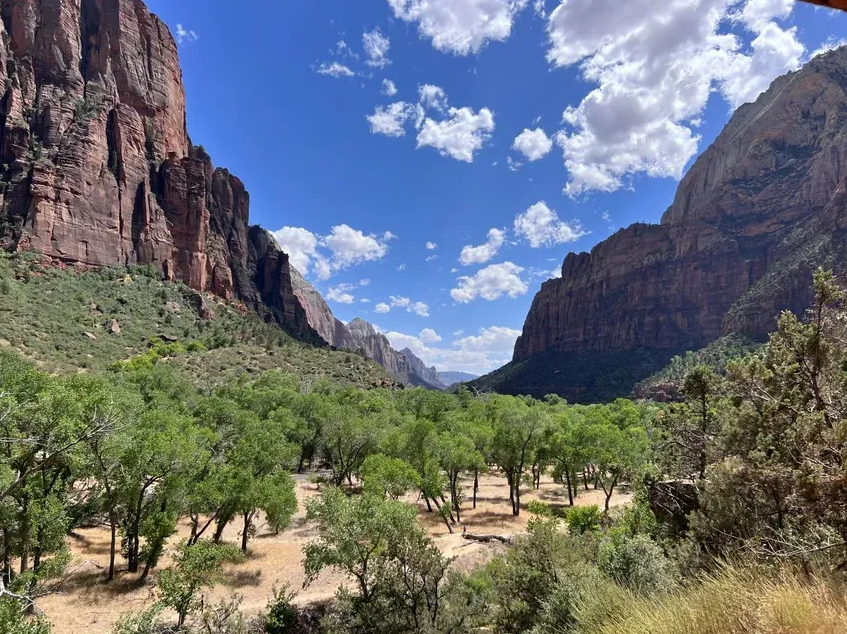
While Utah may not be your first thought when planning your next vacation, you won't regret visiting for its otherworldly arches, mile-long canyons, and gorgeous mountains.
Millions of people visit the state every year. Its five national parks – Arches, Bryce Canyon, Canyonlands, Capitol Reef, and Zion – saw about 11 million people in 2024.
My sister and I flew down from Seattle to Las Vegas one morning in June 2024, starting our trip there since we had never visited. We rented a car and spent the rest of the day reveling in what Vegas had to offer: brunch at Snooze A.M. Eatery, the gigantic Bellagio Conservatory, and the aliens at Area15 (an entertainment venue).
Having indulged ourselves, we set off early the following day on a three-hour road trip to Utah, distracted along the way by all the interesting structures, like the Aztec sandstone formations that looked like giant beehives in Valley of Fire State Park.
I never felt out of place when visiting the state, but I mainly stuck to the national parks. For those looking into a more urban visit, Salt Lake City is a very LGBTQIA+-friendly place, with its large and established population of Queers. It ranks third in the nation for the proportion of married same-sex couples in 2020, according to the Census Bureau.
Zion National Park
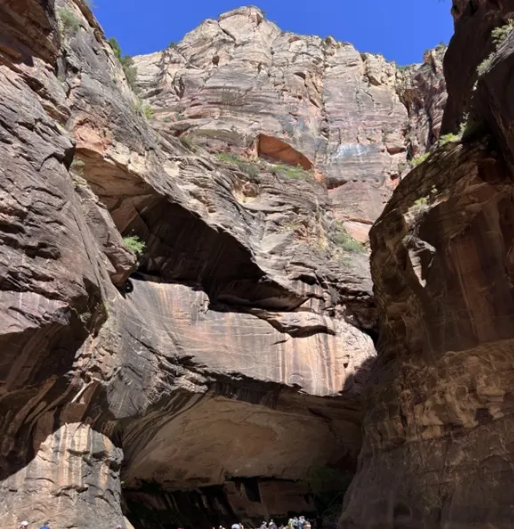
Zion National Park has an abundance of activities, from climbing Angel's Landing to trekking the desert trails. One of its most famous locations, The Narrows, allows people to trudge upstream through the narrowest section of Zion Canyon as they marvel at the smooth grooves of the walls, carved by water millions of years ago.
I recommend hikers rent neoprene socks, canyoneering boots, and a walking stick from one of the few rental shops around the park, which offer gear for various seasons (we used Zion Outfitters).
Very early in the morning, we picked up our equipment and got on the shuttle bus, as cars are not allowed in the park past the visitor center.
After multiple stops at the park's many attractions, the Narrows trailhead, the Temple of Sinawava, is the very last one. I advise going as early as possible to beat the crowds, as this will give you more time with your traveling partners and nature.
The Narrows is 16 miles long, but most people don't go that far. My sister and I did a total of eight miles round-trip. The water levels vary depending on the time of year: in the summer, they are lower than in the winter or spring, when you could expect to be wading – or more like swimming – through water reaching up to your neck or higher. Most of our hike was through water that reached our knees, but at one point, it rose to our chests. The cool feeling was a welcome relief, since the morning turned into a quickly blistering afternoon.
It felt surreal hiking through the canyon. As some of the few people there so early in the morning, we took in everything around us in relative quiet. We felt the cool water against our heating skin, the smooth walls of the canyon, and the plants and trees that dotted the area around us, sometimes growing in from the top of the canyon.
Another popular Zion attraction is Angel's Landing, a large rock formation, where the hike turns into a climb, with only a chain to hold onto. It is one of the more dangerous park adventures, requiring a permit. My sister and I did not do it, but if you're daring and experienced enough, go for it.
Bryce Canyon National Park
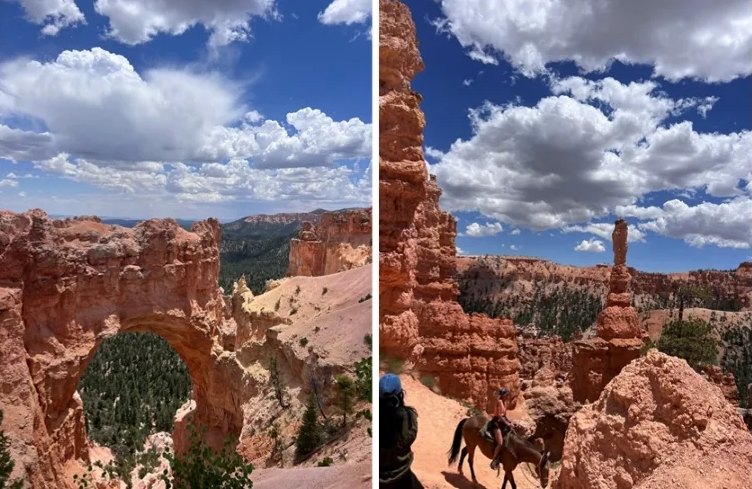
If Zion was a fantasy world, then crossing over to Bryce Canyon, about a two-hour drive, was like stepping onto Mars. There, you can find the largest concentration of hoodoos (irregular columns of rocks) on earth. The structures, dirt, and rocks are a rusty red, offering visitors an otherworldly landscape to explore.
While hiking is a great way to tour Bryce, horseback riding was one of our best choices. My sister and I opted for the three-hour ride; while it was a little pricey, it was worth the money. We gave our tired legs a rest from the previous few days as we rode through the landscape on beautiful horses, past trees and along steep climbs among the hoodoos. It felt like being in a Western film, with the heat on our backs, the steady pace of riding a horse, and the desert surrounding us.
Another key part of the park is the Southern Scenic Drive from the Visitor Center to Rainbow Point, at over 9,000 feet, the result of uneven tectonic forces that uplifted the region over the last 20 million years. There are several places to stop on the way, such as Sunrise and Sunset Points, Natural Bridge, and Agua Canyon Overlook.
Looking back on this trip with my sister, it's apparent to me that it's important – now more than ever – to support national and state parks to preserve nature and educate people about our world, especially considering the Trump administration's staffing and funding cuts.
Utah may not be your first choice to visit, but I highly recommend it. You might be pleasantly surprised!
Visit the National Park Service's website for more information about Zion and Bryce Canyon National Parks (https://www.nps.gov/index.htm).
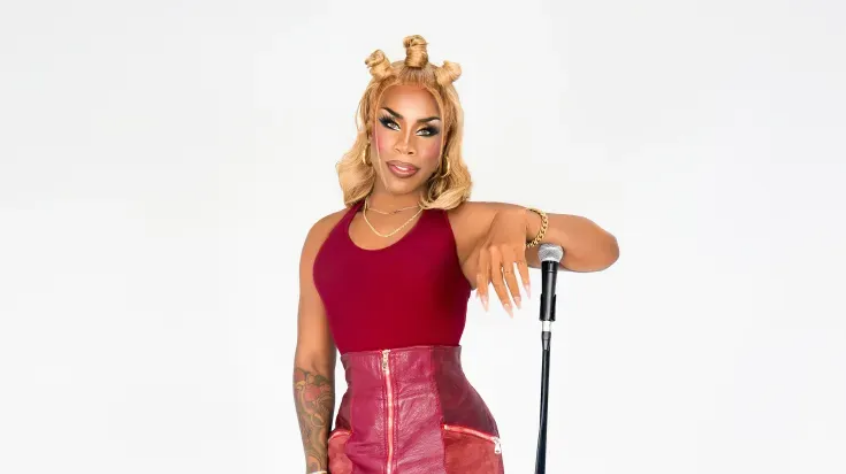
Comedian, opera singer, and RuPaul's Drag Race winner Monét X Change is bringing her coming-of-age story to the Neptune Theatre this January. The one-woman show, Life Be Lifin', will inspire laughter one minute and bring tears the next.
Written by Monét (who asked to be referred to by her stage name) and directed by prominent Seattle drag queen BenDeLaCreme, it will tour the US and Canada from Jan. 9 to Feb. 2.
"I want my Seattle folk to come out to the show and sell that bitch out!" Monét told the SGN.
"This show talks about me finding my voice," she said, "whether that was an experience jerking off in a basement with school friends or getting broken up with in a Gay bar. Or just the rigmarole of going through college as an 18-year-old kid [and] finally becoming an adult and collecting STDs. I kind of talk about all of it."
Monét's first venture into one-woman productions was Call Me By Monét, a drag show performed in New York City and later worldwide. She said Life Be Lifin' is different: more intentional and thought-out. She credited BenDeLaCreme for helping her streamline her thoughts and craft the narrative of her life.
"It ebbs and flows beautifully, and it's emotional, funny, and witty," Monét said. "I guess my inspiration behind this was to tell a little more of my story, about how I found my voice."
One topic she touches upon is Queer youth who may be struggling with being their authentic selves. Monét emphasized that while there is pressure for people to come out and "just be you," no one acknowledges how much work it takes, and how hard it can be for some.
"Everyone comes into their own and to their understanding of themselves differently, at their own pace and time. I've never subscribed to the notion that everyone should 'just do it now, girl, just come out, let the world know.' Like, no, that means different things for different people," Monét said.
Albums
Monét released her R&B album, Grey Rainbow Vol. 1, in May. With the latest Spotify Wrapped, Monét saw hundreds of thousands of people streaming her music, and even made it to some listener's top artists.
"I'm not someone who comes from a big label. I don't have any machine behind me. I just literally make music and put it out there. When anyone listens to me for hundreds of minutes out of the year, I think that's really cool. I love seeing that."
She revealed that her next album, Grey Rainbow Vol. 2, will be released in the spring of 2025, almost a year after the first. It will contrast the contemplative and reflective sound of the first through a tonal shift: more upbeat, loosening its shoulders, and letting itself dance.
Tickets for Life Be Lifin' are currently on sale at https://www.obsessedwith.co/monet-x-change-live.
MOHAI explores intersection of technology and Queer lives
By Aisha Misbah
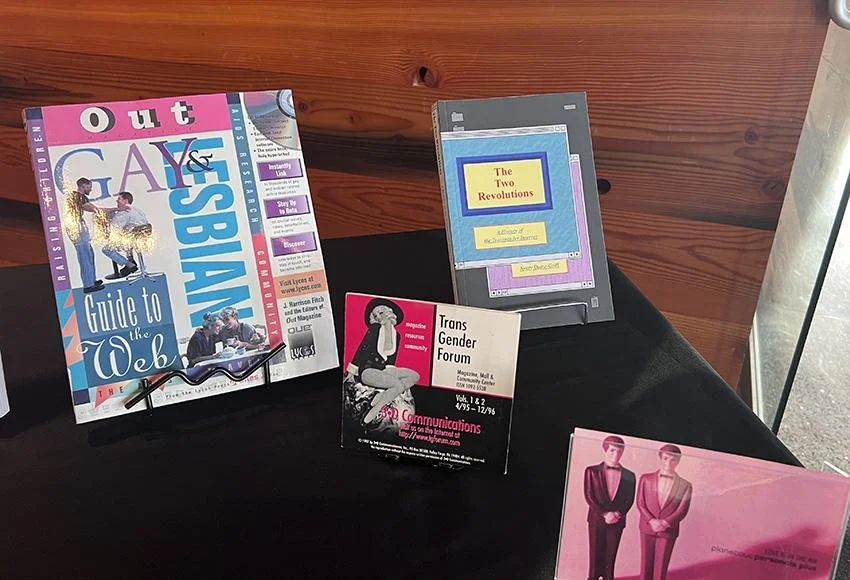
On Wednesday, May 15, the Museum of History and Industry (MOHAI) hosted a talk called "History Café: Love and Modems," highlighting the impact of technology on the LGBT community. Dr. Avery Dame-Griff, a women, gender, and sexuality studies lecturer at Gonzaga University who has been studying the LGBT community and technology for more than a decade, hosted the talk.

While the history of the LGBT community and technology is expansive, Dame-Griff focused on the bulletin board system (BBS) usage in Washington State from the 1980s to the 1990s. Before mainstream internet use, BBSs were the easiest platforms the average user could access, a private, noncorporate system (that is, not managed by a bigger body, such as Meta).
This worked as follows: a user with a computer could use a modem to dial a phone number specific to the BBS, and a modem on the other end would pick up the call and log the user into the server. The user could now access chat rooms, files, games, etc.
So what did the social aspect of this type of online community mean for the Queer community?
28 Barbary Lane
There were two prominent BBS in the Seattle area for the Queer community, 28 Barbary Lane (28BBL) and the Seattle AIDS Information BBS (SAIBBS). 28BBL was founded in 1985 by the system's operator (or "sysop"), J.D. Brown, who was in the bar scene but soon tired of it, seeking other ways of connection for the Gay and Lesbian community. He learned about BBS and began to wonder if he could create one specifically for Gay and Lesbian people.
Brown advertised the BBS in the classifieds section of the Seattle Gay News. Soon enough, it became one of the most prominent Queer BBSs in the Seattle metro area. The name, 28 Barbary Lane, was a reference to a Queer book series, Tales of the City by Armistead Maupin.
"One important thing to know about bulletin board systems is that their users were often concentrated locally, because you're using a landline," Dame-Griff said. "This was back in the time of long-distance calling. If you long-distance called into a BBS, you were looking at an astronomical phone bill a month later."
People connected through 28BBL and began to have meetups, do fundraisers, organize politically, and connect through various forums. Many members made lifelong friends and even romantic connections.
28BBL had around a thousand members. The SGN covered it several times in its issues, and the BBS joined the Pride parade in 1993. In 1990, it won the best BBS in Washington state for the industry magazine Boardwatch.
Seattle AIDS Information
The Seattle AIDS Information BBS was founded by Steve Brown, a person with AIDS (PWA), in 1989, allowing other PWAs in the Seattle area free access to treatment news, lists of local resources, and an anonymous forum.
SAIBBS was converted into a nonprofit organization early on. BBSs were never moneymaking enterprises, so they constantly tried to raise funds, such as by becoming subscription-based. 28BBL even organized a fundraiser for SAIBBS to keep it afloat so that PWAs still had access to essential resources.
In the early 1990s, AIDS was still a very taboo topic, and so SAIBBS was sometimes the only resource people had. SAIBBS worked with nonprofits to donate computers to PWAs because, at the time, they were a considerable monetary investment.
Starting in 1995, the usage of BBSs began to dwindle, due to the creation of the World Wide Web, or the internet.
"On corporate platforms, their [Queer people's] presence could be more contingent on how the platform felt about the presence of adult material," Dame-Griff said. "This was especially pressing for Trans folk. BBSs allowed for these kinds of safe, niche community spaces."
Dame-Griff explained that since the person who ran the BBS was local, you would likely see that person at a meetup once a month. Members could complain directly to the sysop instead of filing a complaint through email to a corporation only to just sometimes get a response back. A BBS was more personal and not managed by a large corporation that determined what you could and couldn't post.
Dame-Griff discussed how we could see a non-corporate-run internet today; for some people, corporate platforms such as Facebook have always existed.
"This history tells us there's this whole kind of thing where you have an internet, a digital community, [that's] locally grounded," Dame-Griff said. "I hope some folks, the next time they hear about one of these alternative networks, they're not just like, 'Well, why would I do that?' and [instead] they're like 'Huh, maybe I should try it.'"
Dame-Griff ended the talk by asking people to open their minds to ways of using the internet that aren't owned by giant corporations and instead seek ways to connect online with people locally and personally.
The professor is continuing his research into BBSs and the Queer community and seeks Queer community members that were part of 28BBL and SAIBBS in the 1980s and 1990s. His email is dame-griffa@gonzaga.edu